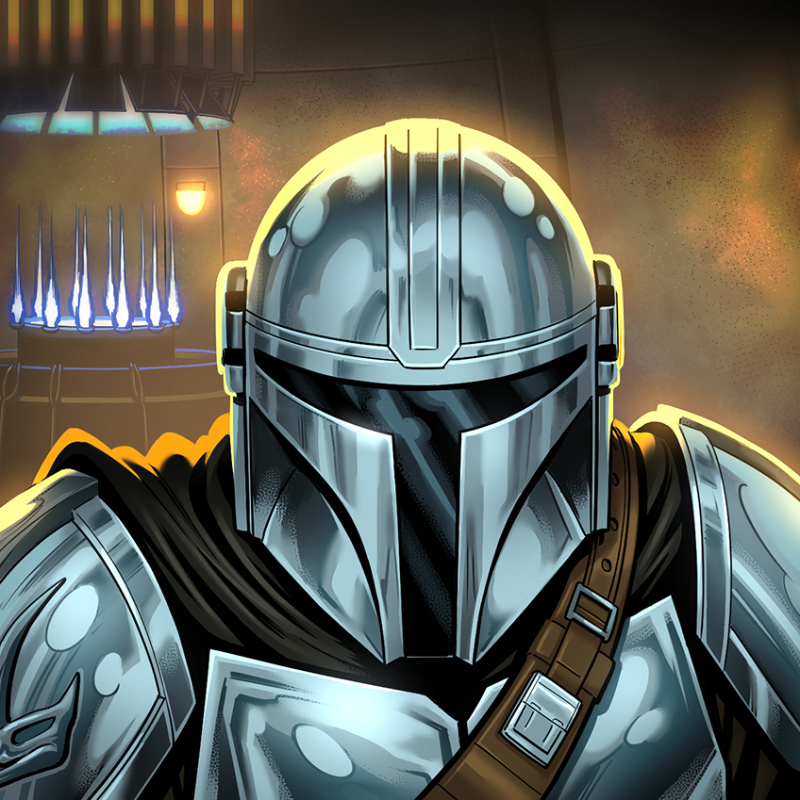
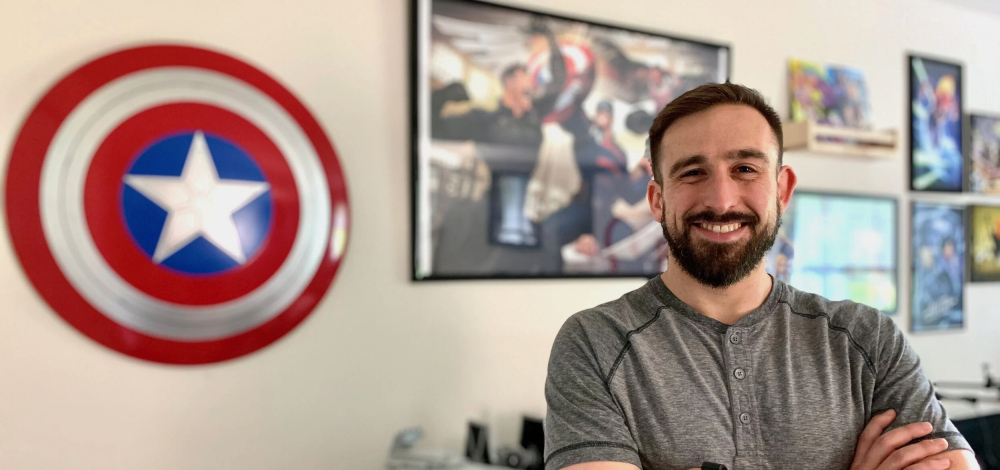
Meet the Illustrator: Kyle Petchock.
Kyle has accomplished a lot in the last 5 years working as a full time freelance illustrator. Originally from New Jersey, Kyle has created a steady work flow for himself with multiple clients including: Atomic Mass Gaming, Renegade Game Studios, Fantasy Flight Games & Marvel.
During our interview, we talked about his professional trajectory, illustration background, home life and his artistic process.
Where are you from?
I was born in Summit New Jersey on January 12th 1992.
Have you always been interested in trading cards?
Yes. Trading cards were a big part of my childhood. I always collected Pokemon and Yu-Gi-Oh cards, not so much to play the games but for the awesome artwork.
What was your favourite game growing up?
Pokémon cards were definitely my favorite.
How do you feel your passion for trading cards has helped you as an illustrator?
My passion for TCGs has helped me as an illustrator because more than anything I've always loved drawing single pieces, and seeing the amazing art displayed in organized card binders. Now that I have the privilege of seeing my own art on cards, it's rewarding to know that others can enjoy my work during game play over and over again.
Did you go to art school or attended any classes?
I didn't attend an art college. I attended Lycoming, a liberal arts school, and studied graphic design there because, back in 2012 I didn't know I could actually become a professional illustrator. So I took the more practical route like most do, but after graduating in 2015 I struggled for a long time to find that first job, and I wasn't willing to settle for not doing what I went to school for. Otherwise, what was the point? Not wanting to regret not going for it in ten or twenty years was a huge motivator for me to stick with it. If I quit now, what would my future self say? Would he be proud, or dissapointed?
How did you become an illustrator?
I've always loved to draw first and foremost. After finally landing a graphic design job following many months of struggle, I soon realized it wasn't what I really wanted to do. I worked at that job for eight months, and during that time I started doing some freelance work for Marvel's character licensing. Soon after I landed my first gig doing comic art, and I realized I should be pursuing illustration. So I left that day job and went for it back in early 2017. It's been a crazy ride and hasn't always been easy, but I can look back and proudly say I'm glad I took the risk. You don't grow or make your dreams happen by staying in your comfort zone.
What software and device do you use?
I work all digitally and use Clip Studio Paint as my software of choice, along with my Wacom Cintiq 22" tablet and my iPad Pro for when I want to work outside my home office space.
Can you tell us about your creative process from initial brief to the finished product?
I always start with a rough thumbnail sketch, whether I'm working on a personal piece or official card art for a client. I always start this step at a small scale, when it's ready, I increase it to the full canvas dimensions and begin chipping away at the fine details. Next I go over the pencils with clean inks, followed by the color rendering. That's always my favortie part of the process.
How are you dealing with work/life balance? How do you check out after a long day?
In the beginning when I started freelancing, there wasn't much work/life balance because I was hungry to succeed as an artist, and faced tough financial times. Consequently, I had no choice but to keep grinding even on days when I didn't feel like it (and there were plenty of those). Now that I've established myself and become a parent, I'm prioritizing family time and taking on fewer projects to better care for my mental health. There's much more of a steady work/life balance these days, and my work schedule is broken up throughout the day to accommodate my daughter. Once I'm done for the day I'll usually close up all devices and relax with my wife.
What do you enjoy most about being a professional illustrator?
What I enjoy most is getting paid to do what I love, and that this career has given me everything I have in life now. If I hadn't decided to take the chance to freelance years ago, I never would have moved out of my parents' house into my first apartment, where I wouldn't have met my wife, and we wouldn't have had our beautiful daughter or moved into our current house. I credit all the blessings in my life now to my art, and I'm grateful I didn't quit.
What does a typical day look like for you while you're in the middle of a big project? Do you have any special routines?
A typical day usually starts with waking up around 5 am to do some work before my daughter wakes up. If I have to handle preschool drop-off and pick up, I'll do work at a local coffee shop on my mobile iPad. That comes in handy on days I don't get to use my home office as much. Then I'll work through her nap time and again in the afternoon / evening after her bedtime. On a day that a grandparent is available to babysit I'll have most of the day to work. Each day varies, so there's never a consistent routine, at least not until my daughter is in school full time.
Can you tell us anything we don't already know about you?
One thing people may not know is that I suffer from anxiety and have worked to overcome depression as well. Negative thinking patterns are something I'm sure everyone experiences, but severe chronic anxiety can make them debilitating. Dealing with and overcoming these challenges led me to use my motto "Keep Persevering," on my social media accounts, to represent that you can start from the most broken mental place, with no prospects or skills, and still emerge successful. Nothing beats persistence, hard work and perseverance. Tough times don't last, but tough people do.
Do you listen to music while you work or have anything on in the background?
Sometimes I'll listen to music while I work, especially if I'm using my iPad outside of my home office. Other times, I play a movie in the background that I've seen a thousand times before. So it all depends on my mood and what's happening around me.
If you could go back and give your younger self a piece of career advice, what would it be?
If I could go back and give my younger self advice, it would be to have gone for it sooner and not be afraid to do so. Attending art college after high school probably would have been extremely beneficial, but at the time, there wasn't much support or encouragement to pursue a career in drawing, because no one around me had done it before. So I decided to be the first one in my family to do it, and I'm proof that you don't need art school to succeed. I'm sure it's helpful, but certainly not necessary. If you want it badly enough, you'll find a way to make it happen since so much inexpensive and free content is readily available online. You just have to be resourceful enough to find it. I wouldn't be who I am today without all those experiences and lessons learned only by getting out there and taking a swing, even if you fail. Failure is the greatest teacher of all. I would also tell my younger self to prioritize mental health and rest more to avoid burnout, because you can't be at your best without proper rest.
Do you have any advice for any illustrators out there trying to break into the industry?
My advice would be to always be learning and improving at your art, and figure out which direction you want to go in. Whether it's concept art, comics, or card art, have a direction that works for you. I would also advise posting and sharing your work online on as many platforms as possible, because you never know who's looking to hire for a gig. That's some advice my art mentor shared with me years ago, and it's certainly paid off. But while you're waiting for a door to open, prepare and improve your skills as much as you can. When something does come along, you must be ready to seize it, or you'll let it pass you by and regret it later. That's what luck is: preparation meeting opportunity. Another task is networking. They say it's about who you know, and it's so true. Many gigs I've gotten over the years resulted from knowing the right people, getting recommended for a project, and having my work displayed online. Never underestimate the power of networking. Also, being easy to work with builds a solid reputation and leads to more work. Remember, the client is always right in this case. Be good at following directions and deliver results on time, as people prefer working with those who meet deadlines. Above all, always be teachable and never take feedback personally, because it aims to help you grow, not attack you. Clear and prompt communication with a client or art director is also important because it's the backbone of collaboration, therefore, be an excellent communicator. If you can work on all these things, you'll be good to go.
Get in touch if you have any questions or conserns.
Can you recommend an illustrator? Send us a message with the details and we'll look into it.




 test
test